How natural stone solutions can reduce our climate impact.

INSIGHT: Climate-resilient towns

a top view image of a large paving with a circular bench and a tree in the center

How natural stone solutions can reduce our climate impact.

Every municipality is aware of the problem. On hot days most town centres are significantly warmer than their surroundings. Asphalt and concrete must be replaced after just 15 to 25 years. Harmful for both budgets and the climate. The solution - no more renovation cycles, but one radical decision. Because if we want to make public spaces climate-resilient, the most significant lever for doing so is the materials used.

Material shift
Locally-sourced natural stone significantly reduces grey energy.[1] Granite’s embedded carbon is about 20–50 kg CO₂ per tonne and it also has a lifespan of well over 100 years. Verified EPDs are available for our products that provide transparent proof of these values. Locally sourced and pre-fabricated in the factory, the stone is suitable for precise detailing, requires only short closure periods and provides a calming surface pattern. With well-designed structures, it promotes rainwater retention and improves the microclimate without transforming the urban environment.
The stone keeps its promises: low maintenance in day-to-day use, reversible if required, reusable and recyclable into individual materials. As an A1 building material it does not require any coatings, does not cause any release of microplastics and is suitable for paths and squares as well as for bridges, street furniture and water features. Light-coloured granite reflects sunlight; the surface remains safe to walk on even when wet and under heavy footfall.
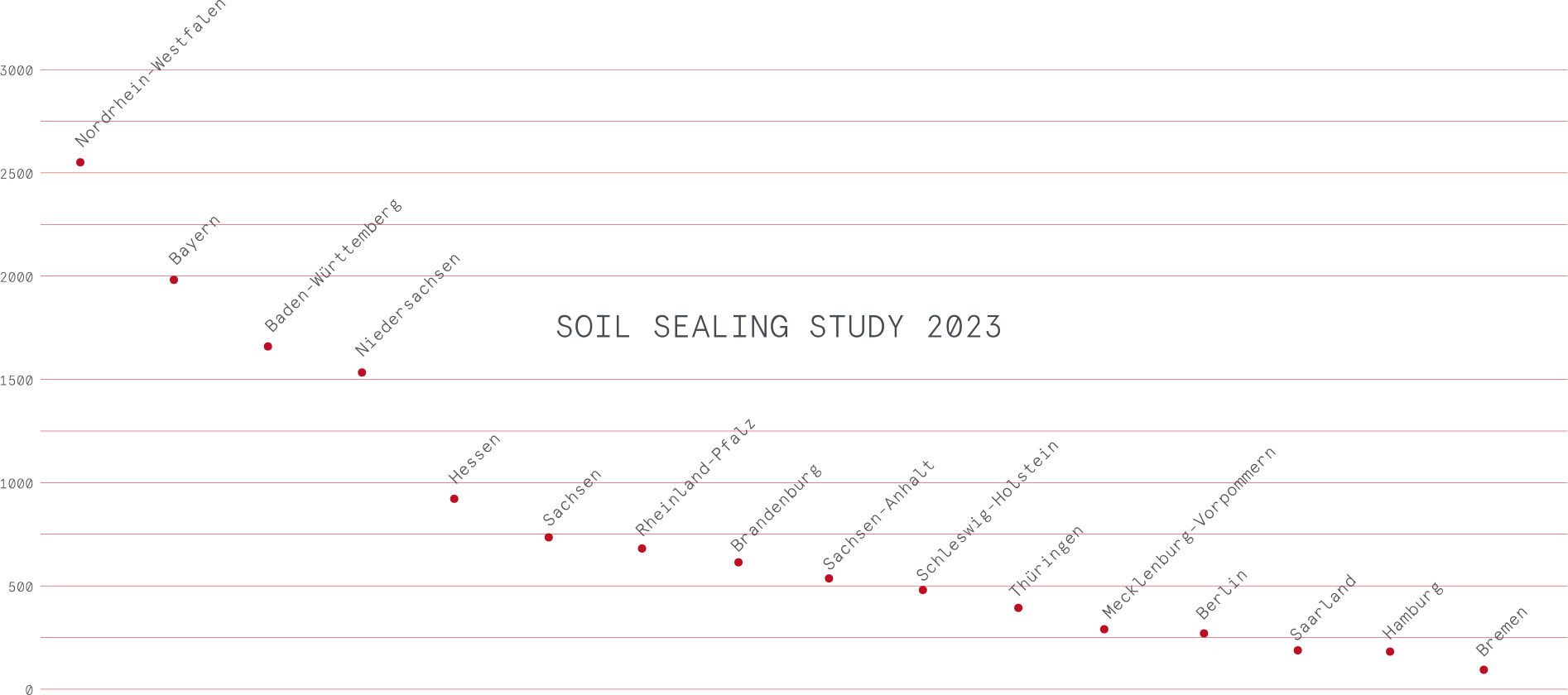
13,090.5 km²: Germany’s cities are heavily sealed

Sponge city approach

Open-jointed natural stone surfaces provide an only partially sealed[2] method of construction: Rain can seep away where it falls through 10 - 20 mm gravel joints and then be retained in the water-storing substrate. On hot days, moisture evaporates and noticeably cools the surface, while the light-coloured stone also limits heating effects. The surface remains safe to walk on and largely permeable, reducing the drainage requirement, so in many places it is classified as partially sealed for billing purposes.

Beyond the surface

When natural stone is used consistently, it not only forms the surface of paths and squares, it does so much more. This natural material is suitable for everyday use in innovative bike racks, robust public park facilities, skate parks, and leisure facilities such as table tennis tables. Its use delivers calming, durable, low-maintenance facilities that enhance public spaces and facilitate maintenance planning.

Evaporative cooling and light-coloured stone surfaces lower the physiologically sensed temperature in suburban areas by up to 6 °C (PET).

Sustainable infrastructure

Pedestrian bridge in a park

Post-tensioned granite bridges blend seamlessly into parks and recreational areas, safely carry pedestrian and cycle traffic, and don’t require surface coatings. The design is slender, slip-resistant and low-maintenance, an investment that promotes climate protection principles in infrastructure, and over the long term does away with ongoing renovation cycles.

If you build using quality today, you create value that does not age but endures.

Josef Kusser, Dipl. Wirtsch.-Ing. (FH), Managing Director

1     Source: DNV / Zukunft.Naturstein: Naturstein für nachhaltige Bauweisen LCA-Broschüre, 2022
2     Source: Versiegelungsstudie GDV/VdS 2023

More

Back to overview